
The dining table is more than just a place to eat good food—it’s where we share our stories, make memories, and gather with family and friends. Choosing the right dining table involves more than picking a style you like. It’s a balance of size, material, shape, and functionality, fit for your space and lifestyle. Here’s a table guide to help you find the perfect dining table for your home.
1. Measure Your Space
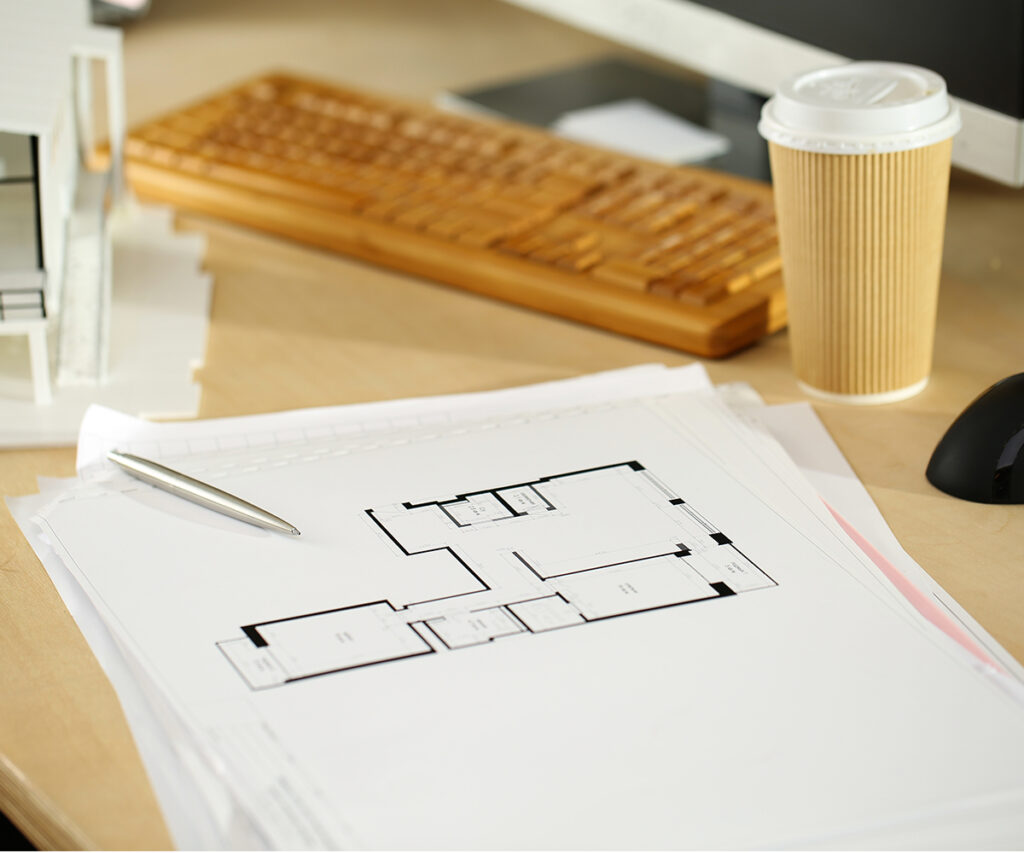
Before you begin shopping, measure your dining area. A common mistake is buying a table that’s too large for the space, which can make a room feel cramped.
- Leave at least 36–48 inches of space between the table and the walls or other furniture so people can move comfortably.
- Room shape matters: Square rooms tend to suit round or square tables, while rectangular rooms often work best with rectangular or oval tables.
Quick Tip:
Use painter’s tape or newspaper to outline the size of the table on the floor. This helps visualize how much room it will take up.

2. Choose the Right Shape
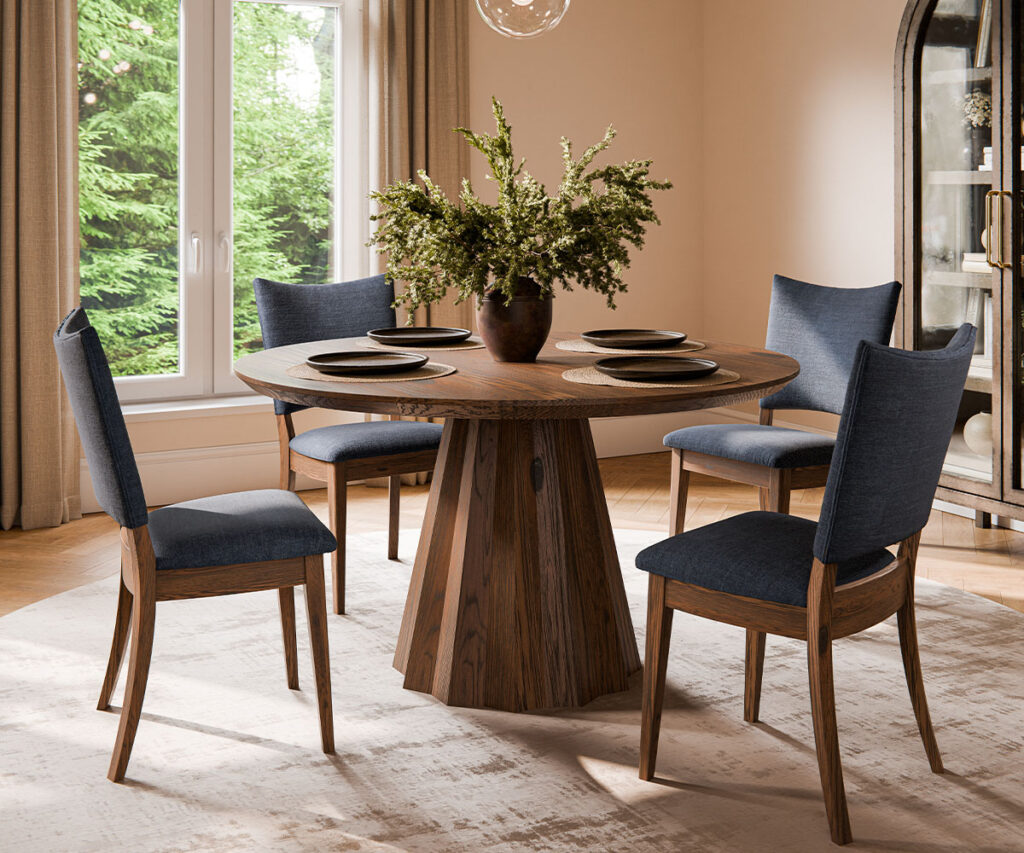
The shape of your table should match the shape of your room.
- Rectangular: The most common shape. This is ideal for long, narrow rooms and larger groups.
- Round: Great for smaller spaces and promoting conversation. Everyone can see each other.
- Square: Best for small, square rooms or casual seating for four people.
- Oval: A softer version of the rectangle—visually lighter and can fit more people in tighter spaces.
3. Pick a Size That Fits Your Lifestyle
Think about how many people you regularly host. Here’s a quick reference guide:
| Table Size | Seats |
|---|---|
| 36–48” round | 4 |
| 60” round | 6 |
| 72” round | 8 |
| 72–96” rectangular | 6–10 |
| Over 96” rectangular | 10+ |
If you occasionally host more people, look for extendable tables with leaves or drop sides.
4. The Materials Matter

The table’s material impacts both its look and longevity. Here are popular options:
- Wood: Classic, durable, and warm. Solid wood (like oak, walnut, or maple) is long-lasting, while veneer options are more budget-friendly.
- Glass: Creates an open, airy feel. Great for small spaces but can show fingerprints and smudges easily.
- Metal: Sleek and modern, often used in industrial or contemporary spaces. Durable but can feel cold or noisy.
- Marble or Stone: Elegant and heavy, but can be porous or prone to staining unless sealed properly.
5. Match Your Style
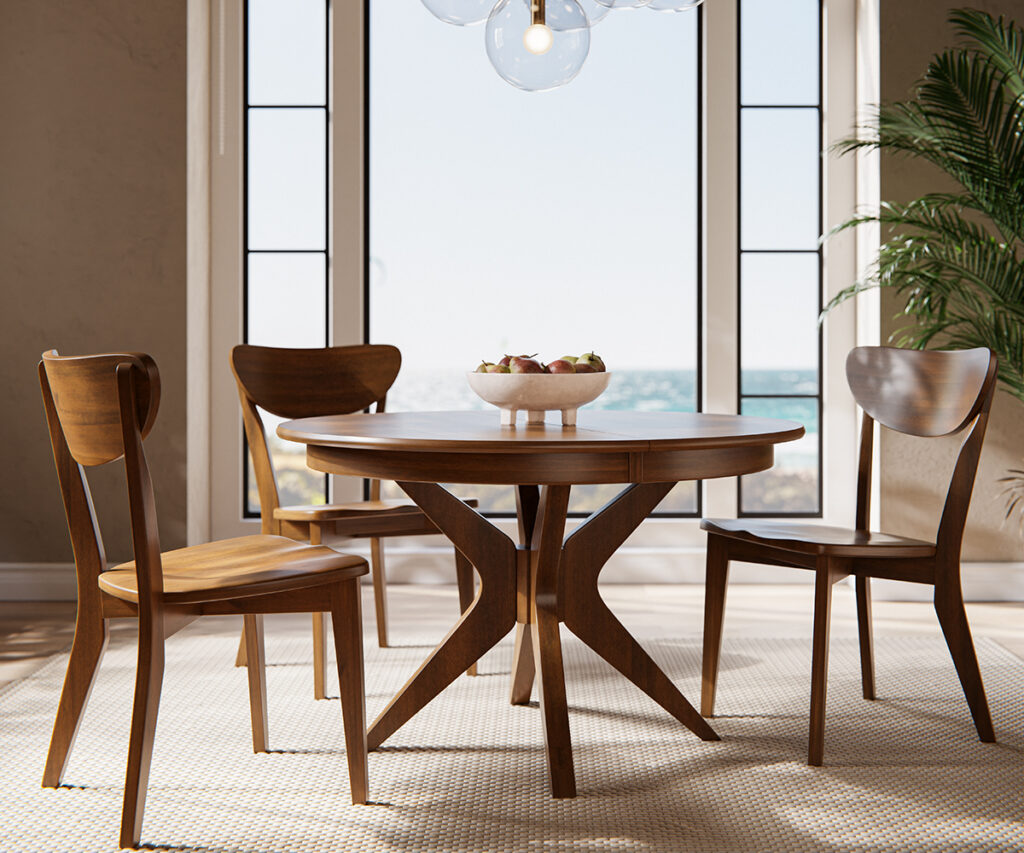
The table should complement your overall décor. Some popular styles include:
- Modern: Clean lines, minimal detailing, often in metal or glass.
- Rustic/Farmhouse: Distressed wood, sturdy legs, and a cozy, homey feel.
- Industrial: Metal frames, reclaimed wood, and raw finishes.
- Traditional: Ornate details, rich woods, and timeless elegance.
- Scandinavian: Light woods, simple lines, and functional design.
6. Think About Seating
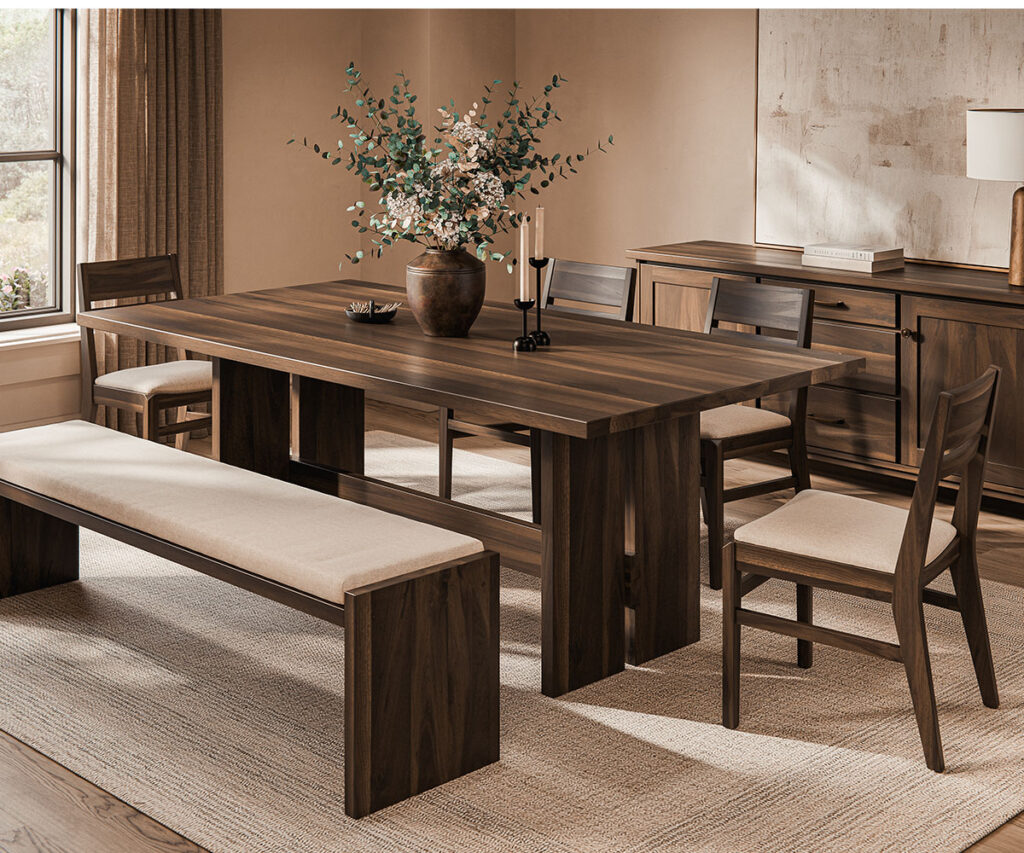
Make sure you consider chairs when choosing your table. Will you go with benches, side chairs, or upholstered armchairs? Make sure there’s enough space:
- Leave 24 inches of table length per person for comfortable spacing.
- Ensure about 12 inches of legroom from the seat to the tabletop.
- Check that chairs slide in easily and that armrests fit under the table if needed.
7. Functionality: Everyday Use vs. Entertaining

Do you eat at the dining table daily, or only during gatherings? For everyday use, prioritize durability and ease of cleaning. For formal dining or entertaining, you may want something more dramatic or expandable.
8. Budget Wisely
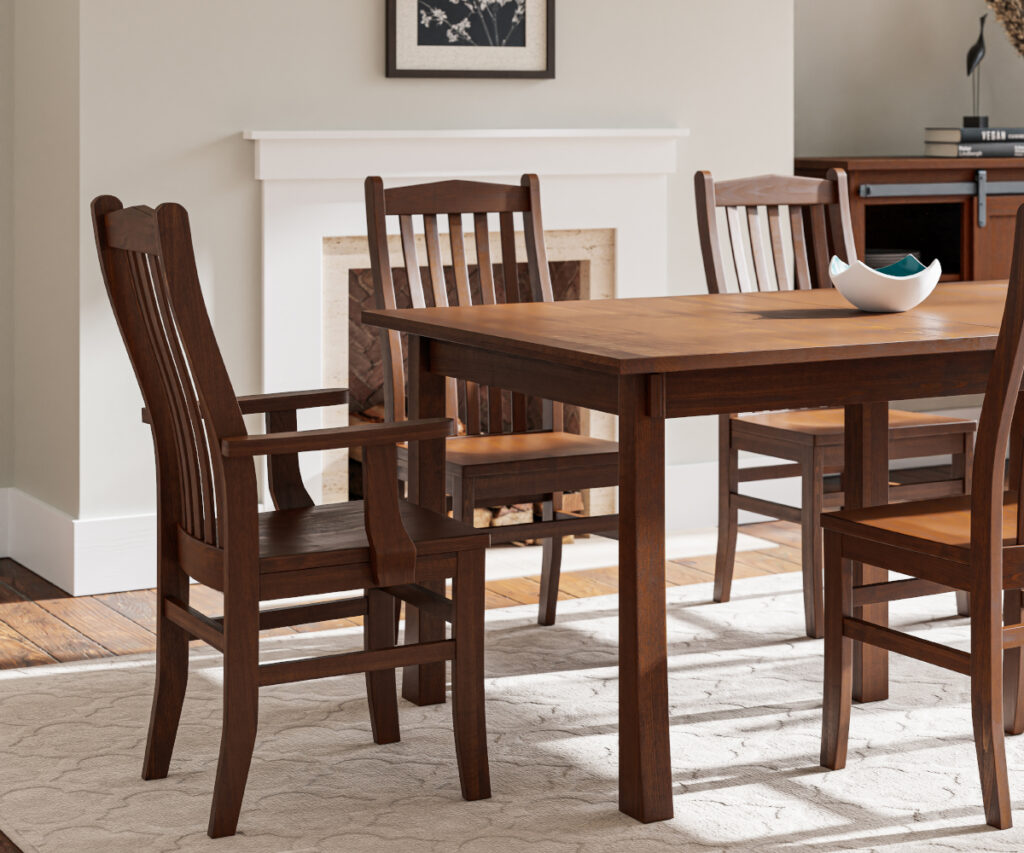
Dining tables can range from under $200 to several thousand. Decide on your budget early and factor in:
- Table cost
- Matching chairs (or buying separately)
- Delivery and assembly fees
If you’re on a tight budget, consider secondhand stores or online marketplaces for high-quality tables at a lower cost.
Final Thoughts
Choosing the right dining table is a mix of practicality and personal style. Think about how you live, how you host, and what kind of atmosphere you want to create. With the right table, you’ll not only enhance your dining area—but also enrich the way you gather, eat, and connect.