Office Furniture
Build an organized and comfortable workspace
Solid Wood Furniture for a More Productive Office
A well-planned office should make it easier to focus, stay organized, and move comfortably through the workday. Heirloom Amish Furniture offers solid wood desks, bookcases, file cabinets, office chairs, credenzas, sewing cabinets, and coordinated collections for home offices, professional workspaces, study areas, and creative rooms.
Our Featured Office Furniture Collections
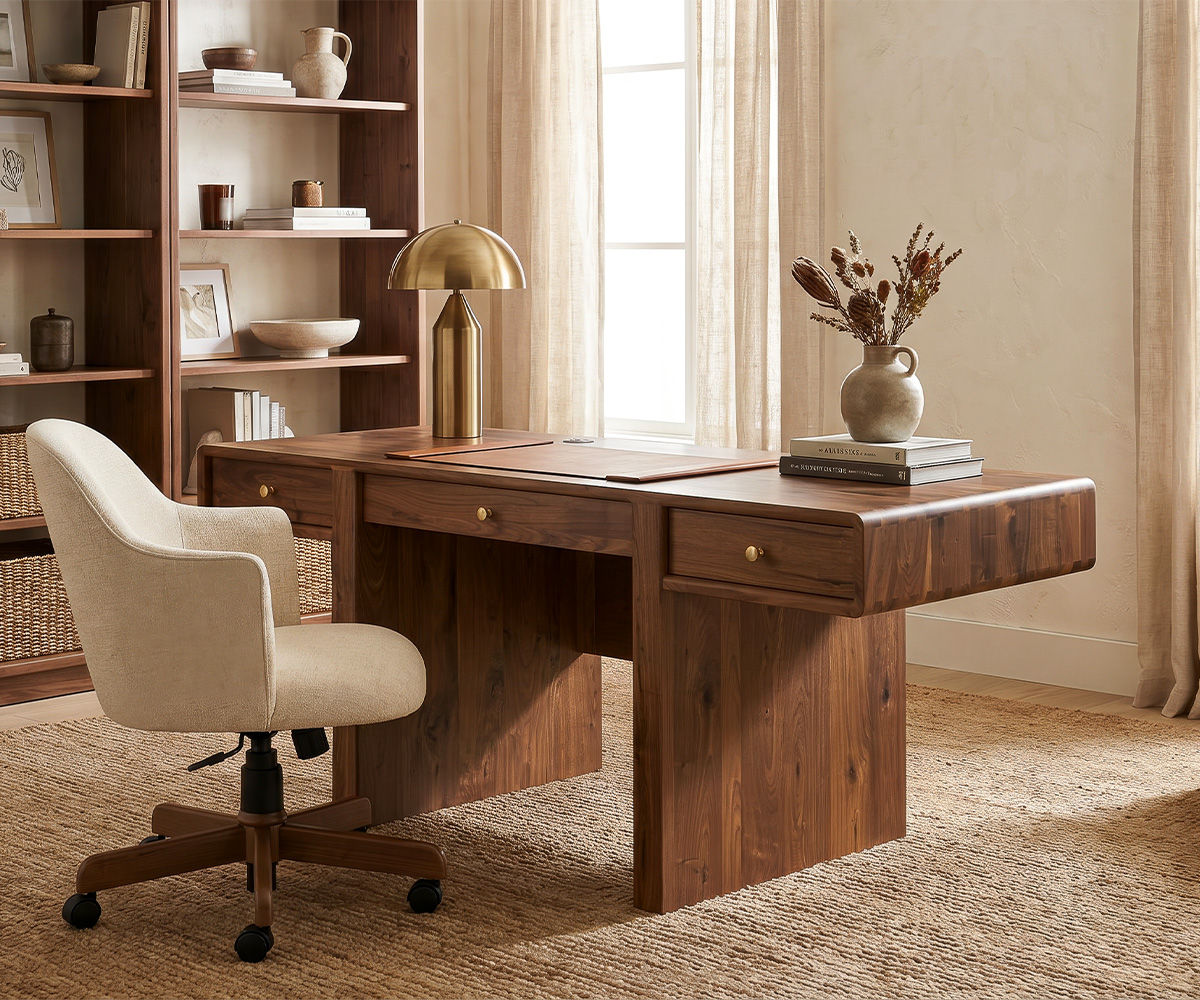
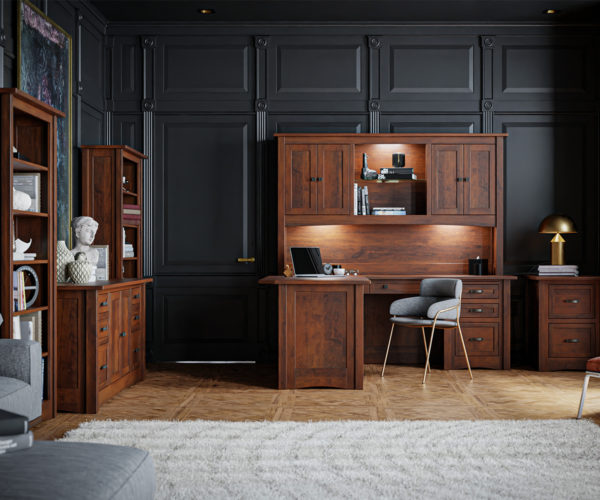
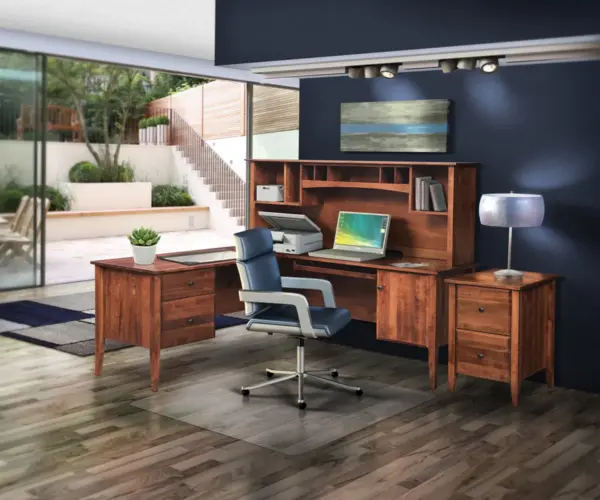
Ashton Office Collection
Shown With:
Wood: Rustic Walnut
Stain: Natural
Features:
- Soft close drawer slides
- Dovetailed drawers
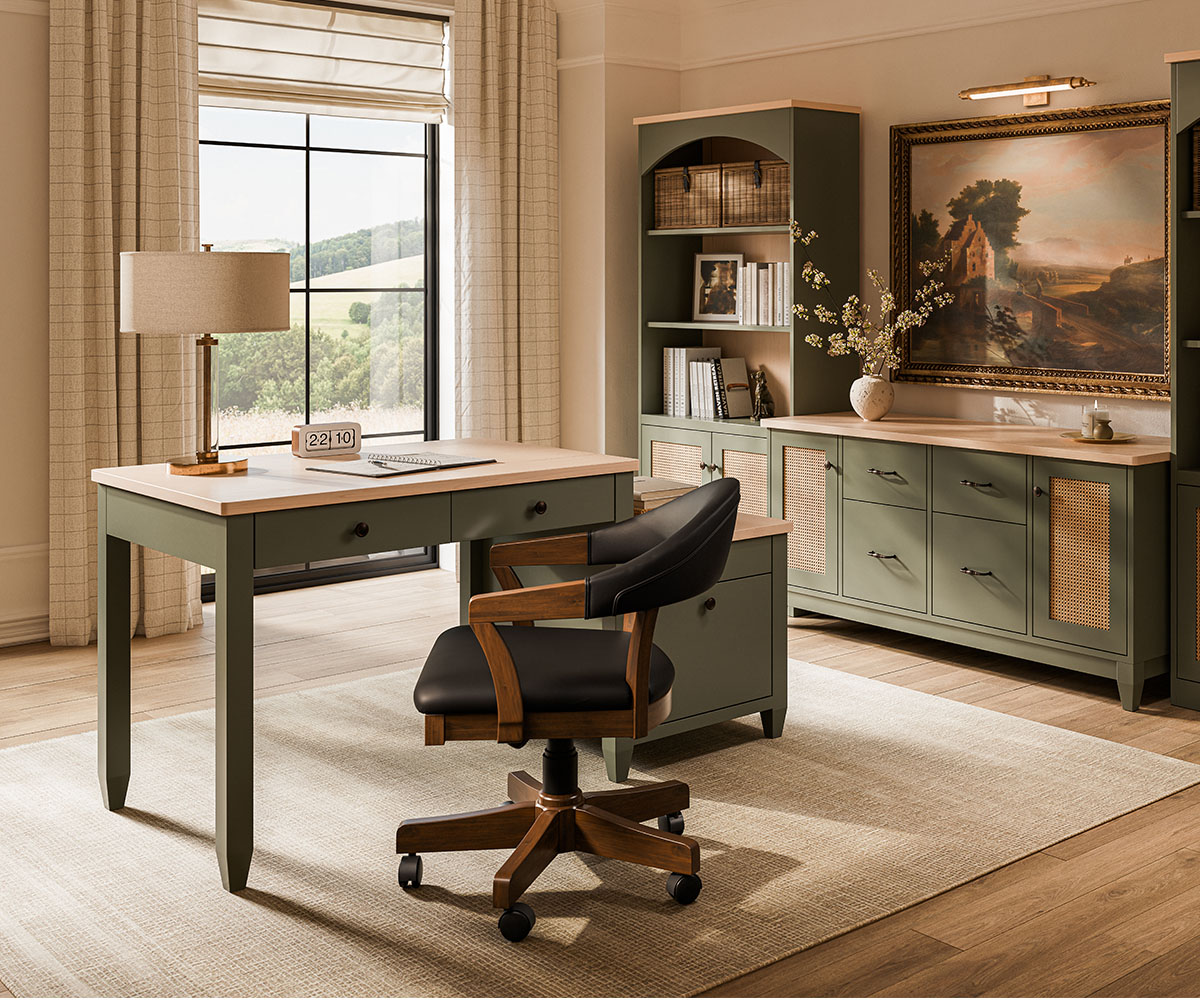
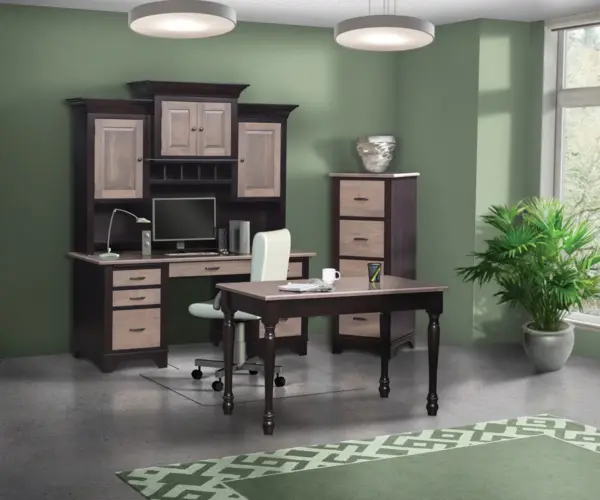
Magnolia Office Collection
Shown With:
Wood – Top: White Maple
Wood – Base: Brown Maple
Stain – Top: Natural
Paint – Base: Ben Moore 461 Rosepine
Office Chair Shown With:
Wood: Brown Maple
Stain: FC-25895
This Collection Includes:
- Magnolia 60″ Desk
- Magnolia 60″ Credenza
- Magnolia Bookcase
- Magnolia Office Chair
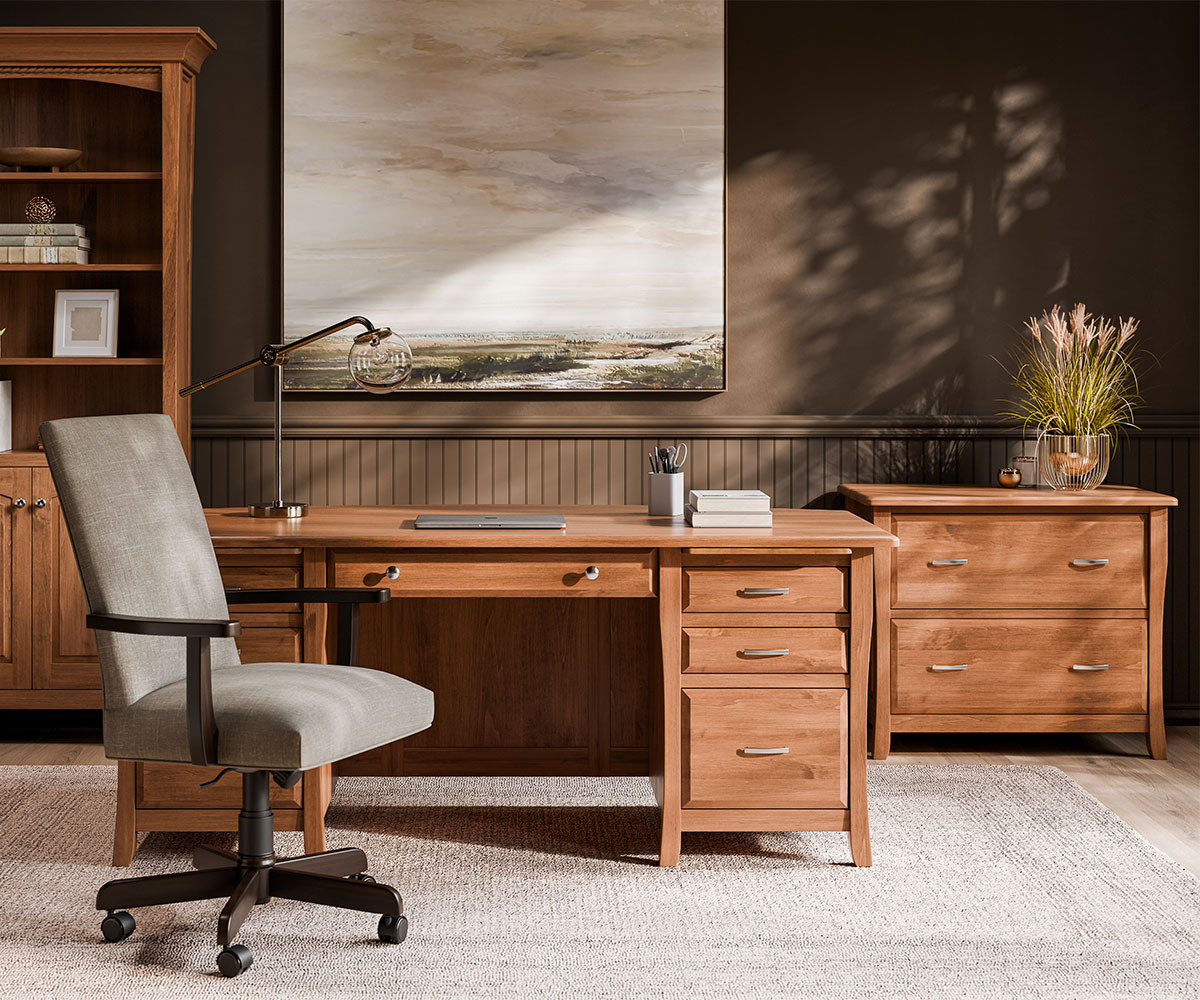
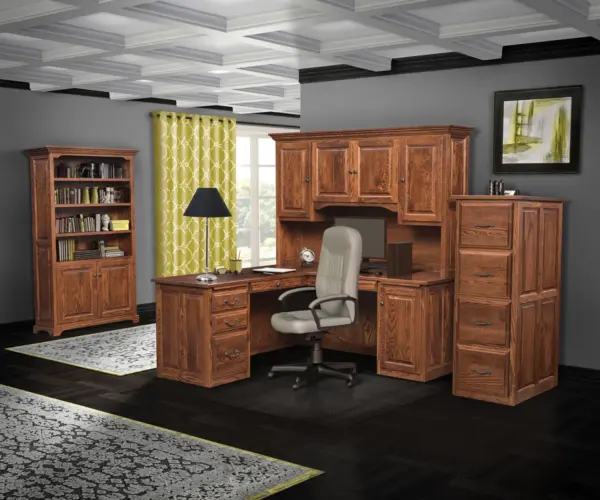
Berkley Office Collection
Shown With:
Wood: Brown Maple
Stain: FC Almond
This Collection Includes:
- Executive Desk
- Bookcase
- Lateral File Cabinet
Browse Office Furniture Categories




Confidence from Selection to Delivery
Office furniture is a long-term part of the workday, so comfort, storage, durability, and room fit all matter. Customer reviews can provide helpful insight into the experience of comparing furniture styles, selecting personalized details, and receiving each finished piece.
Heirloom Amish Furniture has served customers since 1999 with an emphasis on personal relationships and attentive service. Whether someone needs a single desk for a quiet study or a coordinated collection for a complete home office, the goal is to make the selection process clear and enjoyable.



Practical Desks for Focused Work
Choose the Right Desk for Your Routine
Not every office requires an expansive workstation. Standard desks provide versatile open workspace, while secretary desks offer a compact writing surface that can close when the workday is over. Rolltop desks conceal paperwork behind a distinctive cover, and desks with hutches add shelves and storage above the work surface. Comparing these options can help you use your room more efficiently.
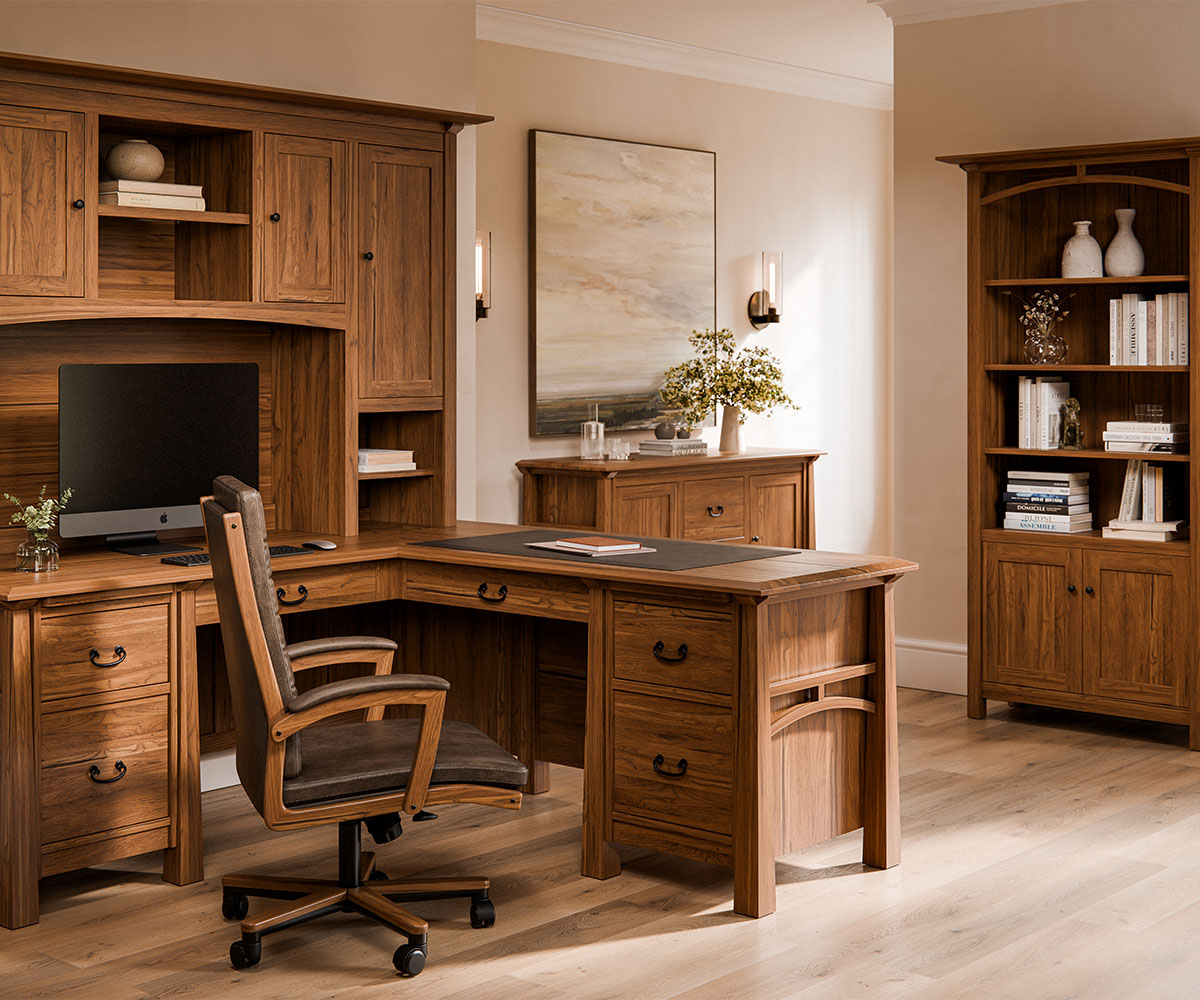
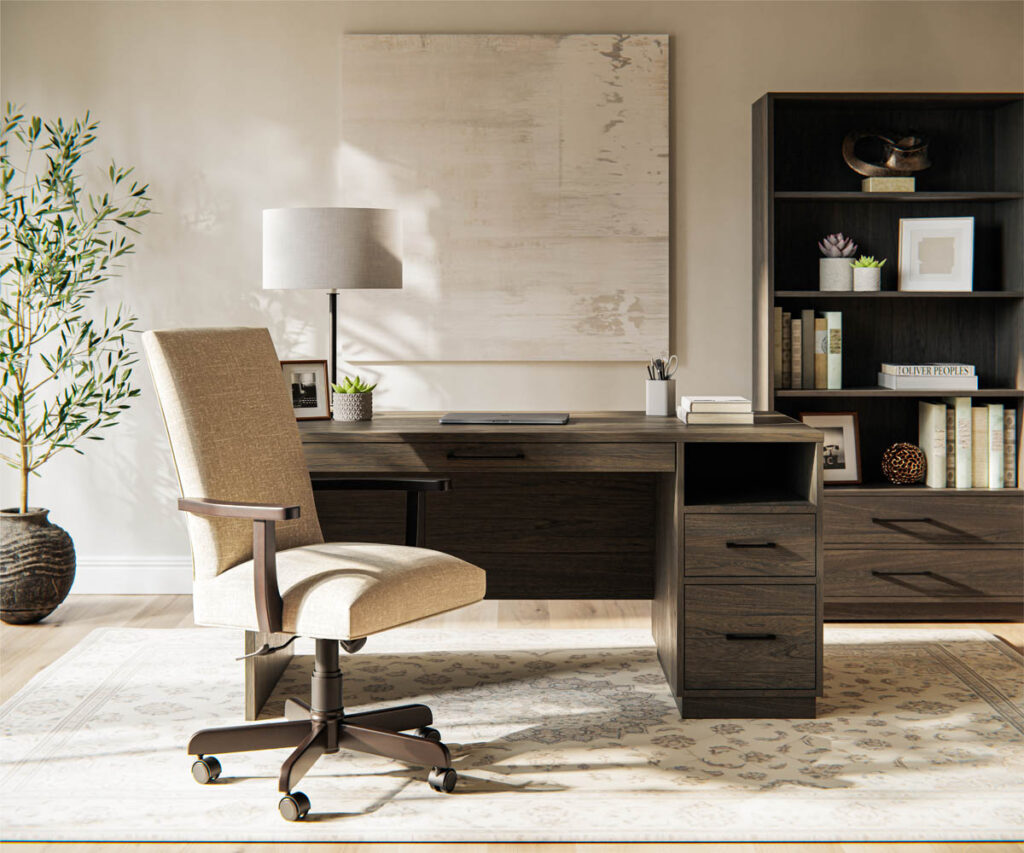
Standard desks provide a straightforward work surface without the height or visual weight of a large storage unit. Depending on the design, they may include one or more drawers while maintaining a clean, versatile appearance.
These desks work well in bedrooms, studies, guest rooms, and smaller home offices. Their simpler proportions also make it easier to position the desk near a window or within a multipurpose room.
Secretary desks combine a compact cabinet with a writing surface that opens or folds down when needed. Interior compartments can keep stationery, mail, and smaller office supplies organized while allowing the workspace to be concealed after use.
Their vertical shape makes them especially useful in smaller rooms or living spaces where a permanent open desk would feel out of place. Confirm the depth of the writing surface and the amount of legroom before choosing a design for regular computer work.
Rolltop desks feature a curved or slatted cover that can close over the primary workspace. Interior cubbies, drawers, and compartments provide dedicated organization for documents, supplies, and frequently used items.
They are an appealing option for customers who appreciate traditional furniture and want to hide everyday paperwork when the desk is not being used. Their substantial construction requires careful measurement of both the room and the delivery path.
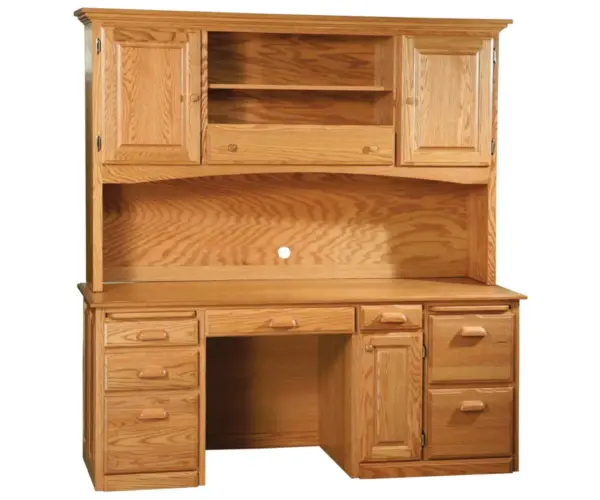
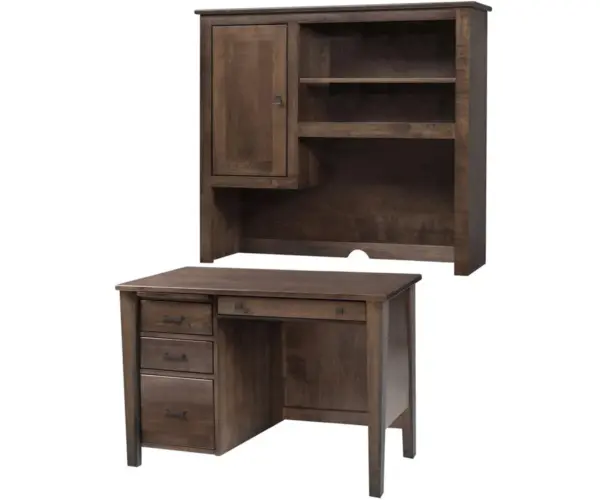
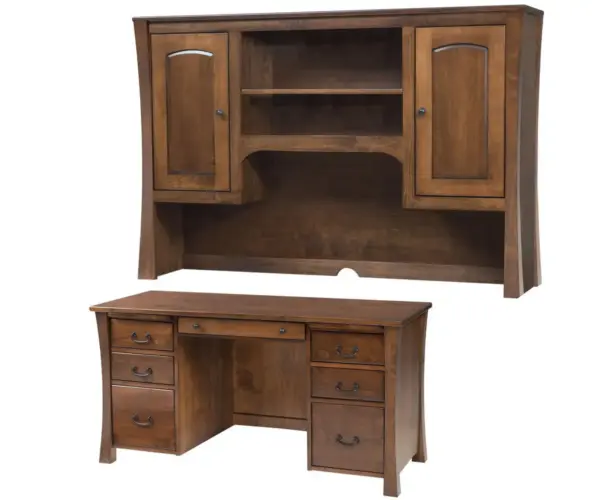
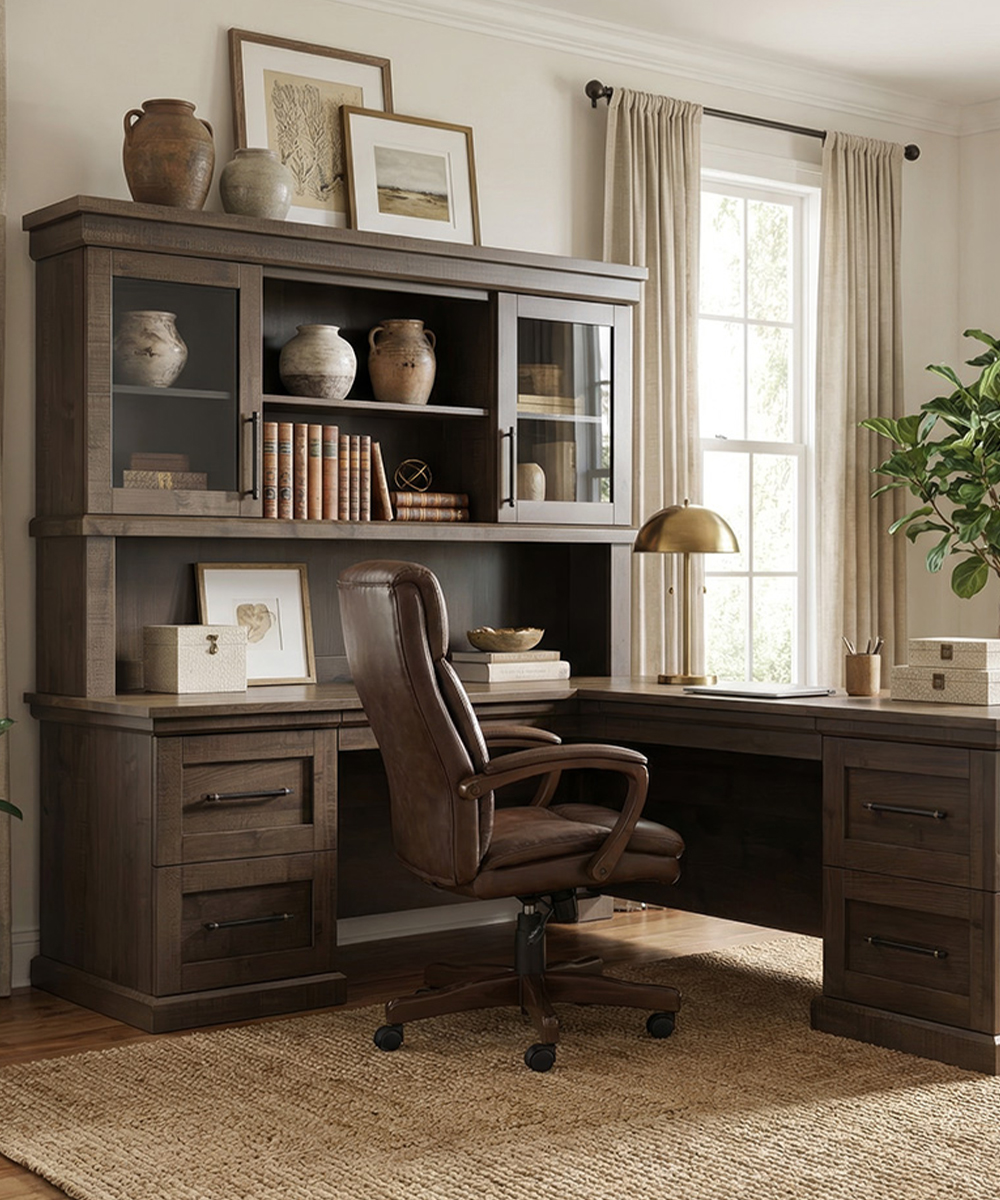
A desk with a hutch uses vertical wall space to provide shelves, cabinets, cubbies, or display areas above the primary work surface. This keeps books, supplies, and equipment accessible without requiring several separate storage pieces.
Hutch desks are useful when floor space is limited but the office needs considerable organization. Check ceiling height, monitor clearance, and electrical outlet placement before choosing the final configuration.
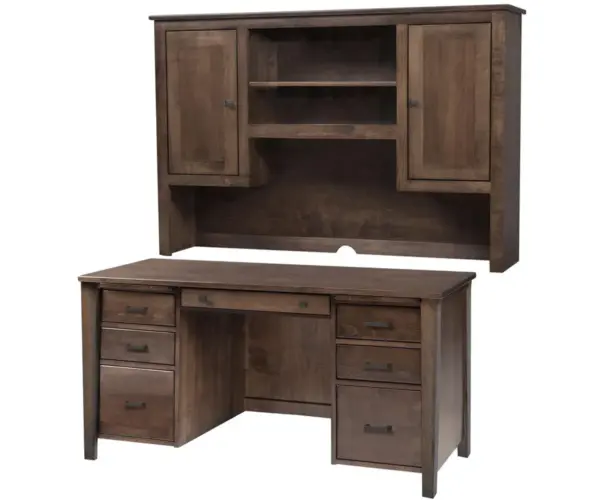
Our Latest Standard Desks


Build a Workspace with a Connected Look
Explore Coordinated Office Furniture Collections
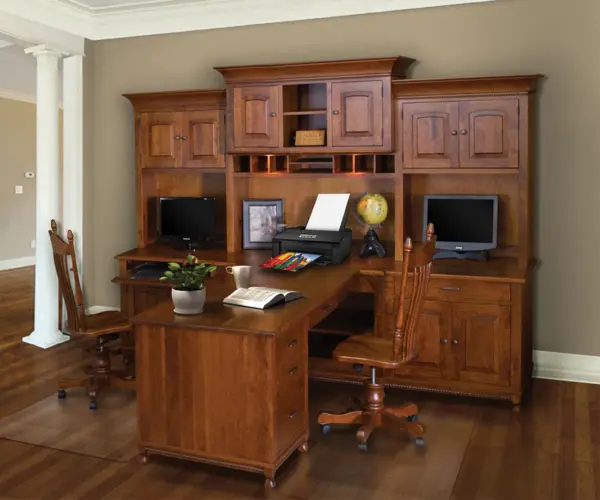
A coordinated office collection makes it easier to match wood tones, hardware, proportions, and design details throughout the room. Begin with the desk that best supports your work, then add bookcases, file cabinets, a credenza, or other storage as the space requires.
You can furnish the complete office from one collection or combine complementary pieces for a more personal arrangement. The most important result is a workspace that feels organized, comfortable, and intentional.
More Workspace for Bigger Ideas
Some work routines require more than a compact writing surface. The right choice depends on the equipment you use, the amount of storage you need, and how much room is available.
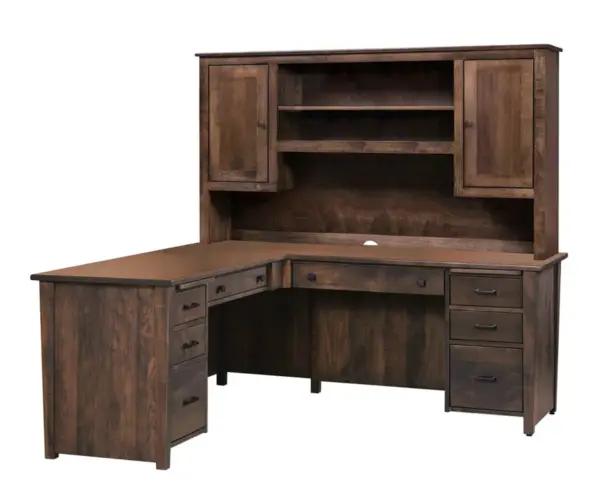
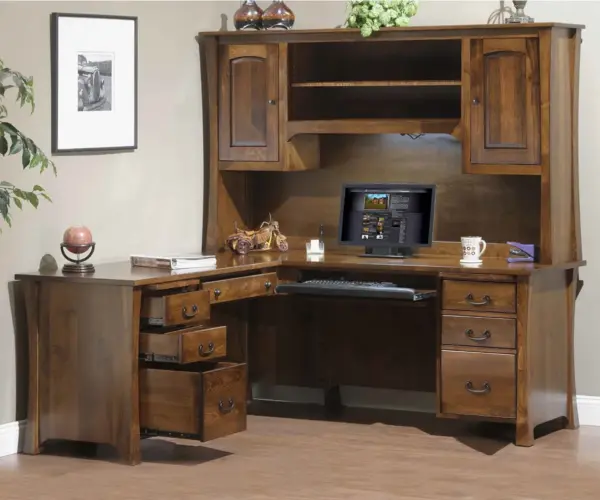
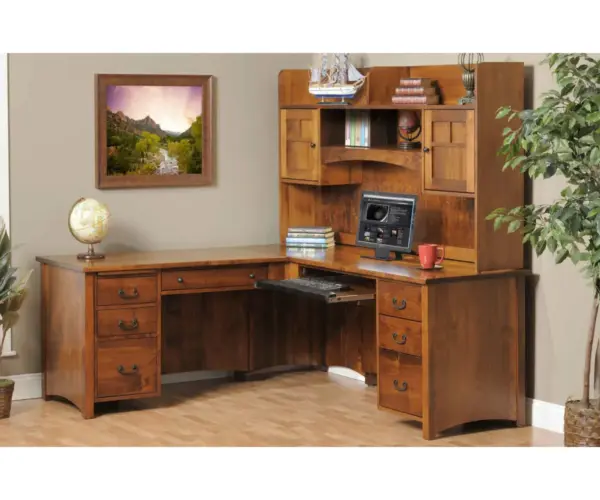
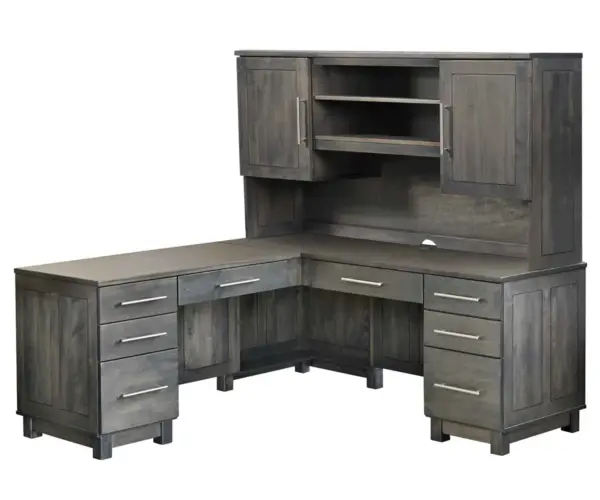
L-Shaped Desks
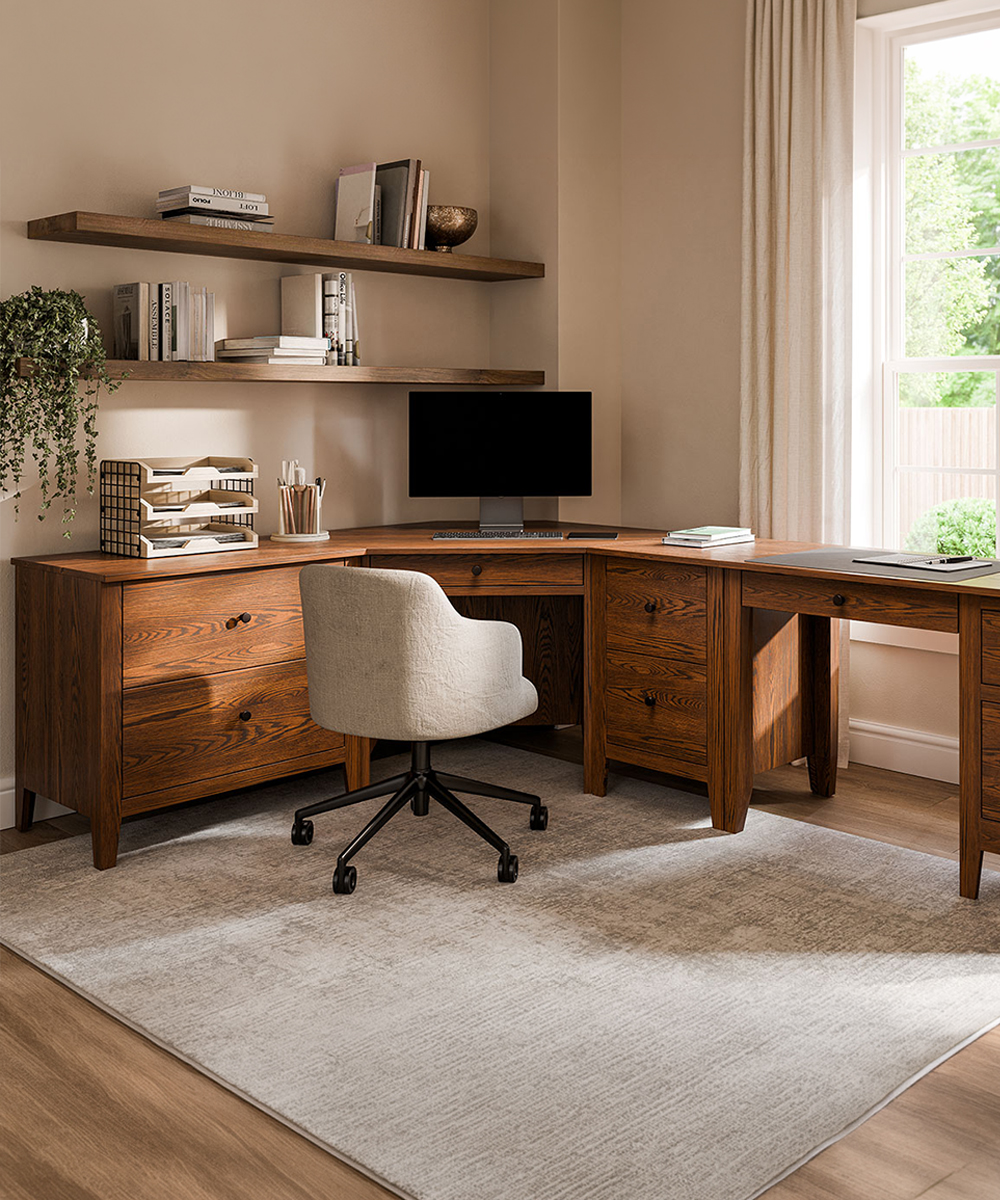
L-shaped desks create two connected work surfaces that can separate computer work, paperwork, meetings, or creative projects. They make efficient use of a corner while offering more surface area than many straight desks.
Consider which side of the desk needs to extend into the room and whether the design can be ordered in a left- or right-facing configuration.
Lift Desks
Lift desks allow the work surface to change height, supporting both seated and standing positions. This flexibility can help users vary their posture throughout a long workday without maintaining separate workstations.
Confirm the minimum and maximum heights, desktop capacity, cord management, and whether the desk requires electrical power.
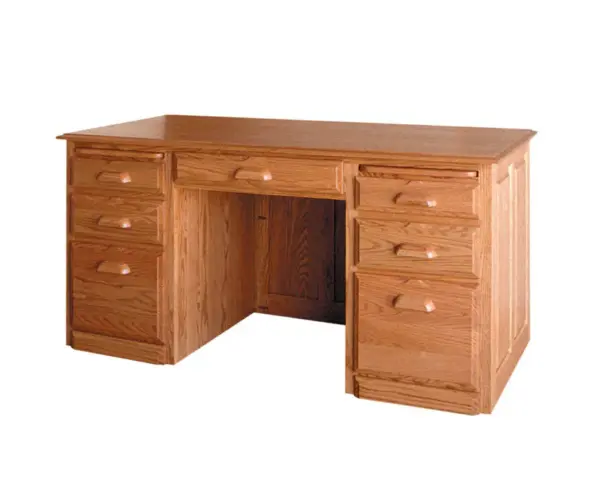
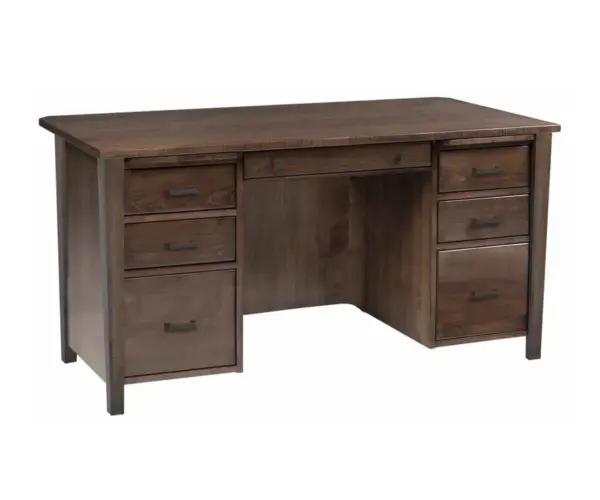
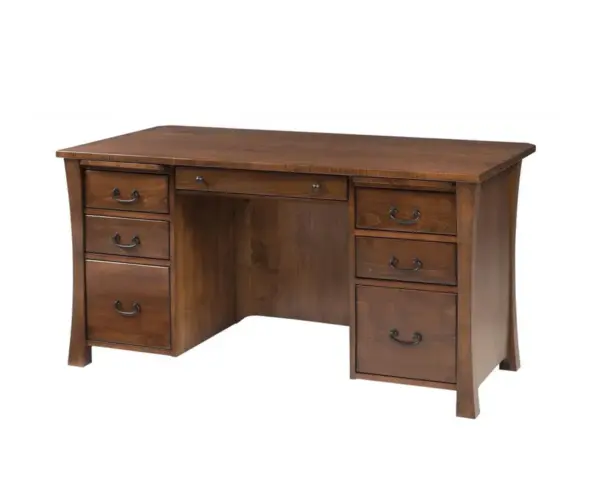
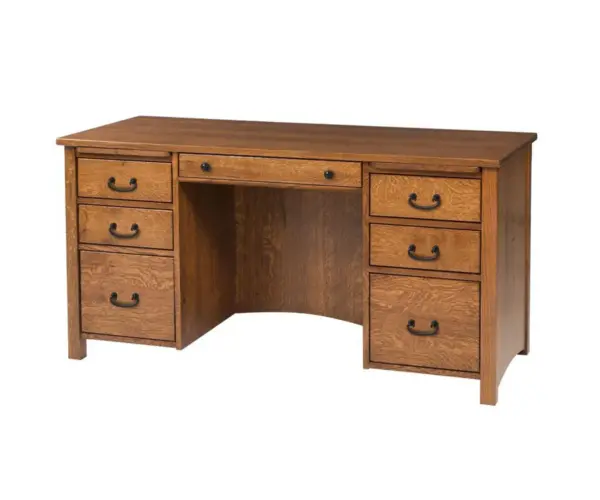
Executive Desks
Executive desks provide a broad work surface with substantial drawer and cabinet storage. They are well suited to full-time home offices, professional settings, and anyone who regularly works with several monitors, documents, or pieces of equipment.
Their finished backs often allow them to be positioned away from the wall, creating a formal office arrangement.
Give Every Document and Supply a Place
Office Storage and Organization
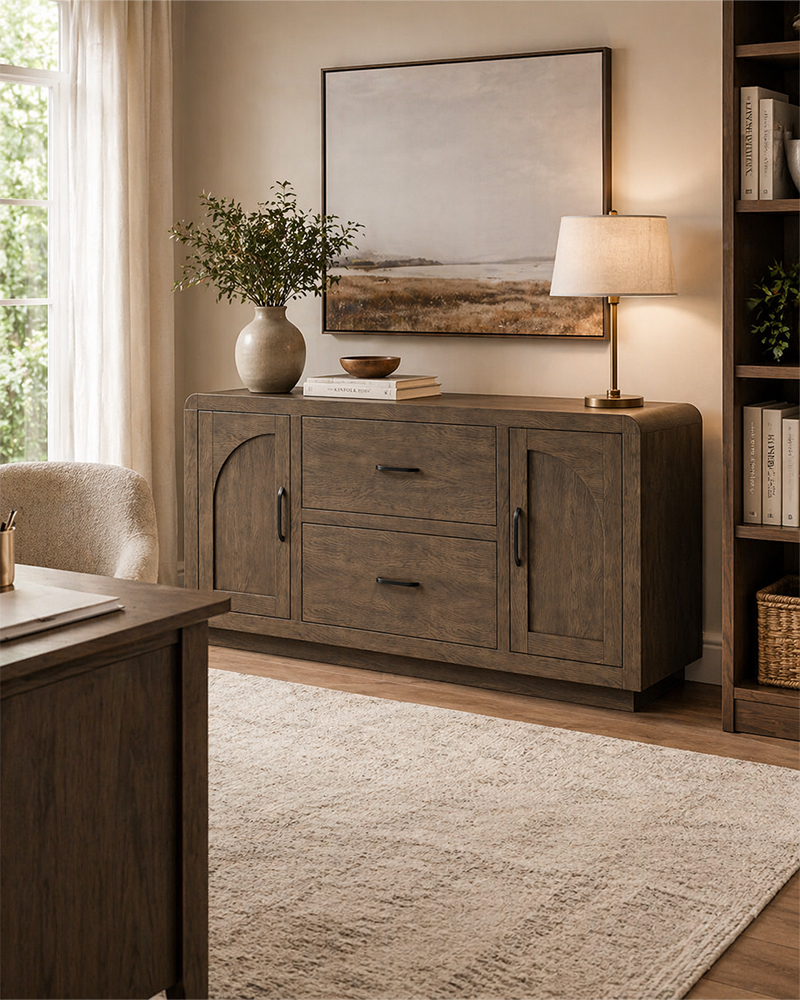
Effective office storage should keep frequently used items accessible while reducing visual clutter. Bookcases provide open shelving for books and display pieces, while credenzas add broad enclosed storage and a useful top surface. Vertical file cabinets organize paperwork in a narrow footprint, and file cabinets with bookcases combine two storage functions within one coordinated piece.
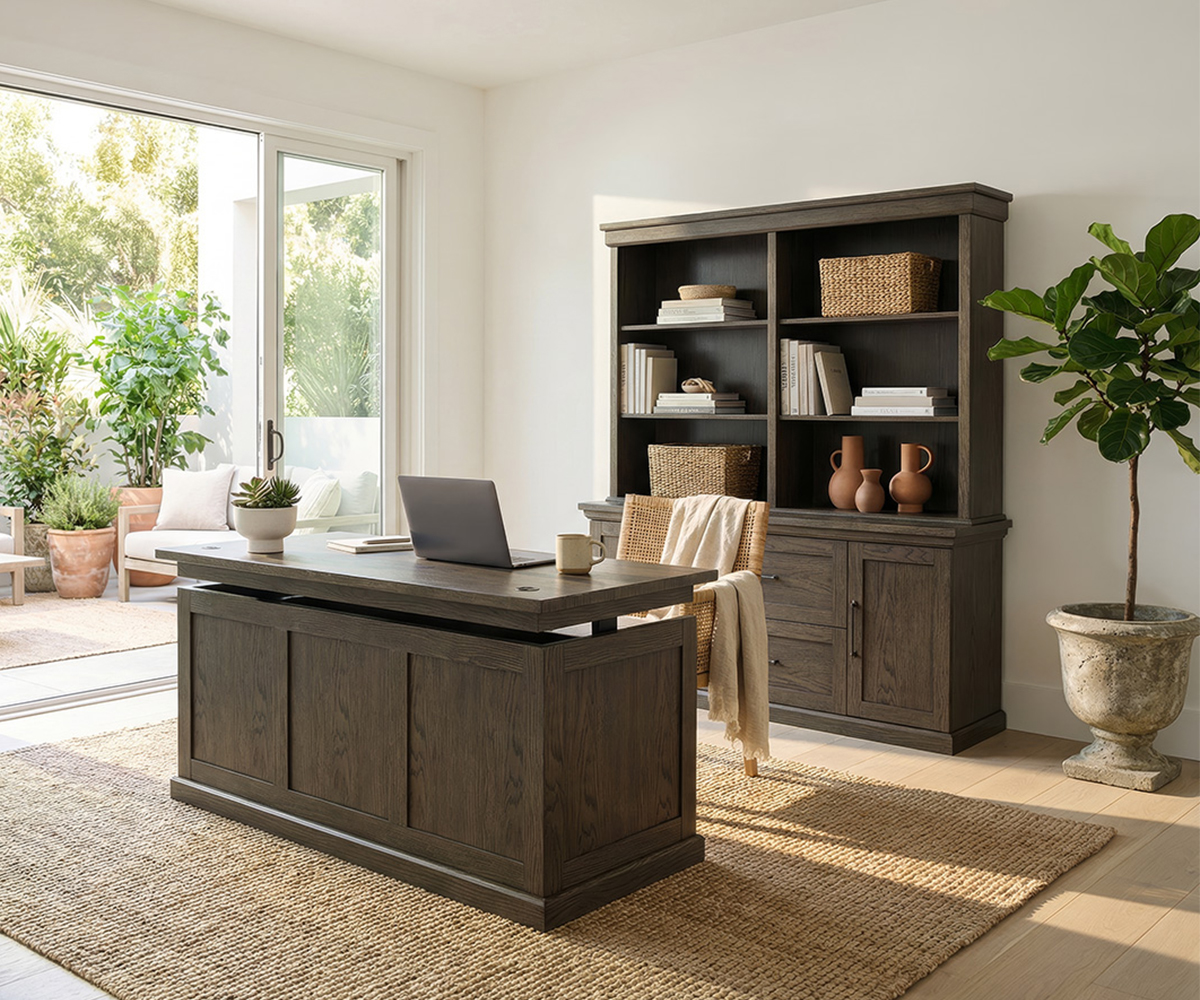
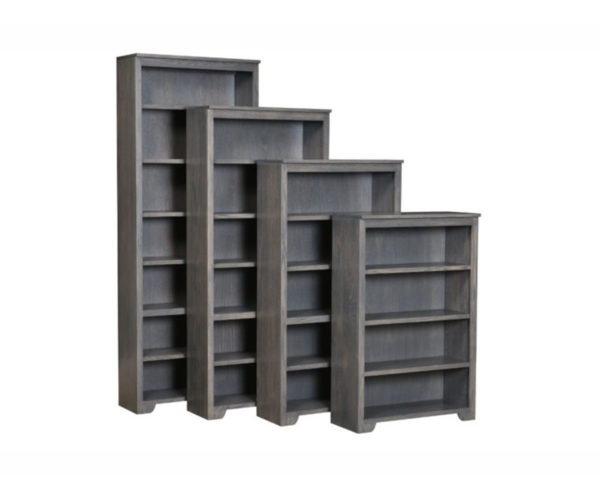
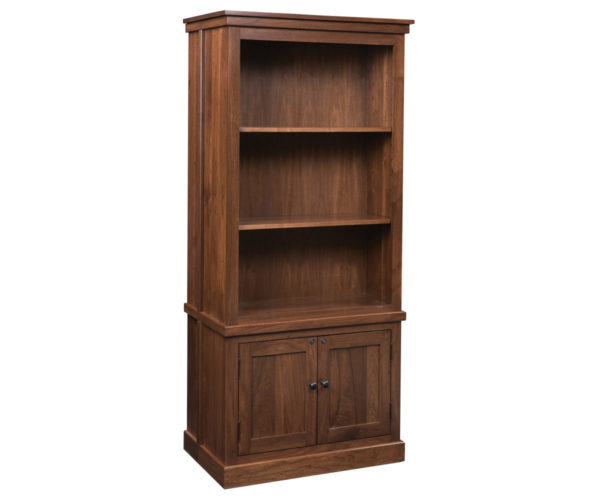
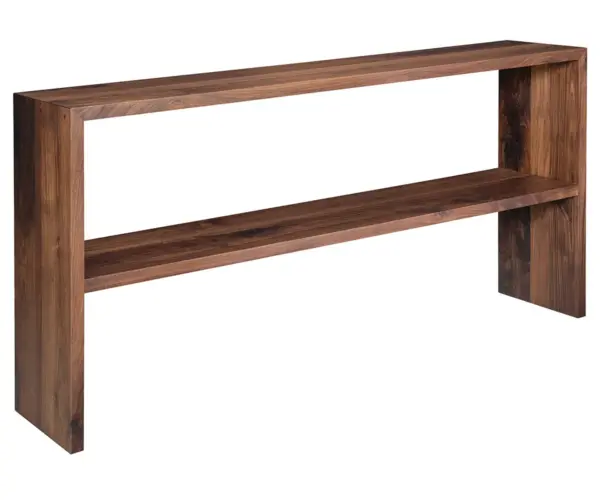
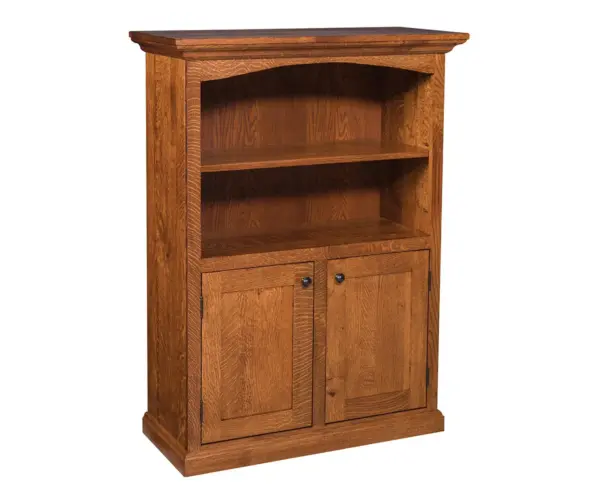
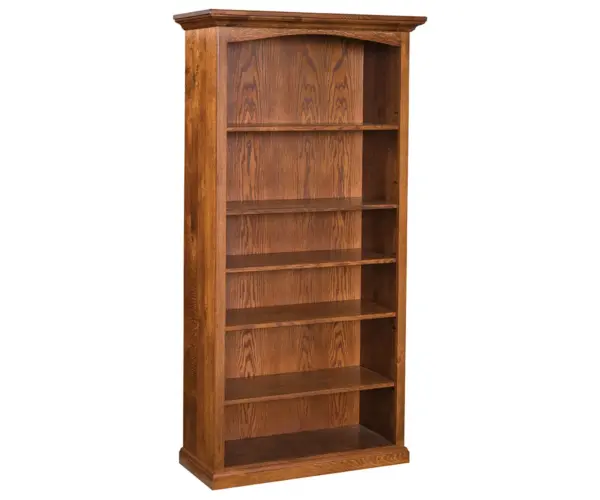
Bookcases provide open storage for reference books, binders, baskets, photographs, and decorative objects. Available heights and widths make them useful for everything from a small reading corner to an entire office wall.
Adjustable shelves offer greater flexibility for items of different sizes. Taller bookcases should be positioned carefully and secured appropriately when needed, especially in homes with children or active pets.
Credenzas are generally low, wide storage pieces that can hold files, office supplies, electronics, or equipment. Their broad top surface may also support a printer, lighting, artwork, or additional work materials.
A credenza can sit behind an executive desk or along an open office wall. Its lower profile adds storage without making the room feel as enclosed as tall cabinetry.
Vertical file cabinets organize documents in stacked drawers while using relatively little wall width. Two-drawer cabinets can fit beside or beneath some desks, while three- and four-drawer designs provide greater capacity.
Before ordering, confirm the type and orientation of files the cabinet is designed to hold. Drawer extension and walking clearance are also important, especially in a narrow office.
Combination file cabinets place shelving above file drawers or enclosed storage, making efficient use of vertical space. They can organize documents at a convenient height while providing room for books and frequently used supplies above.
These units work well when the office needs several types of storage but has limited floor space. Consider ceiling height, shelf adjustability, and whether the piece will coordinate with the nearby desk.
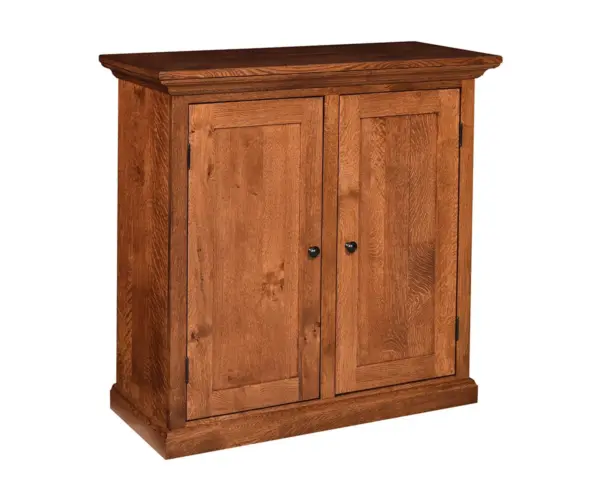
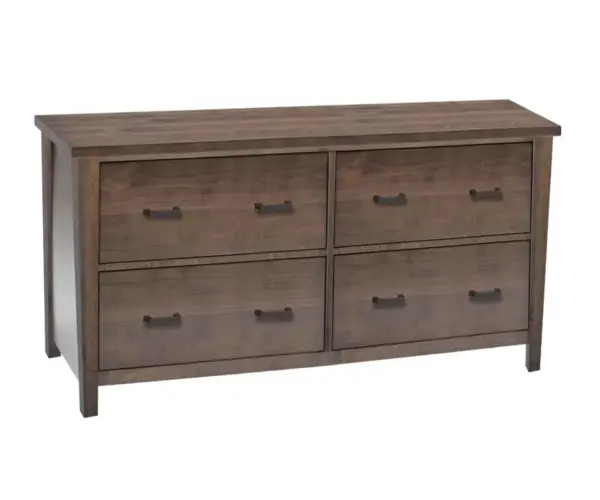
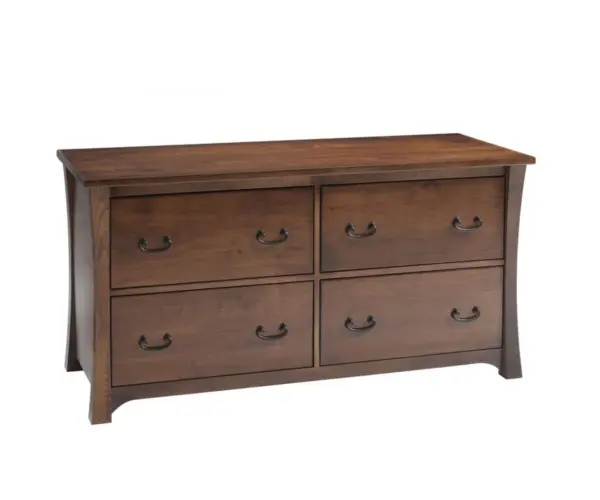
Our Latest Bookcases
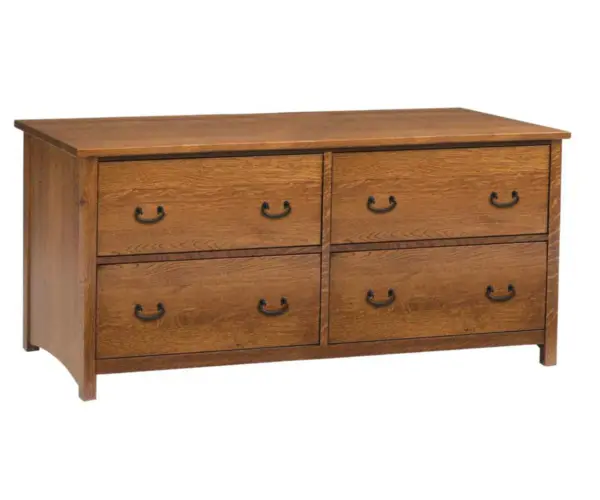
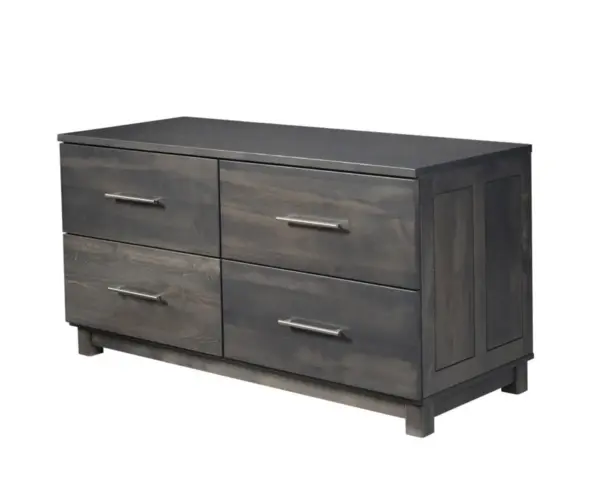
Furniture for Work Beyond the Desk
The furniture surrounding the desk can be just as important as the desk itself. A supportive desk chair affects everyday comfort, while conference chairs provide seating for visitors and meetings. Sewing cabinets create a dedicated workspace for equipment and supplies, and specialty cabinets provide enclosed organization for collections or other items that require a specific storage arrangement.
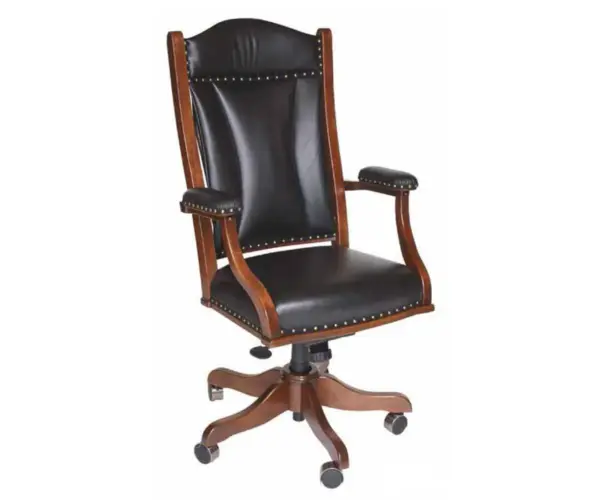
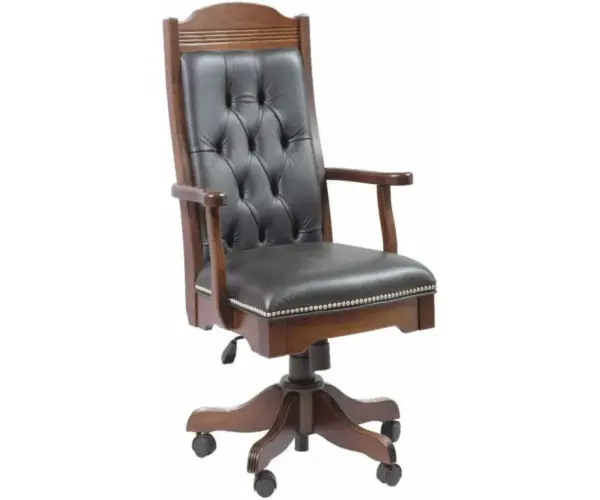
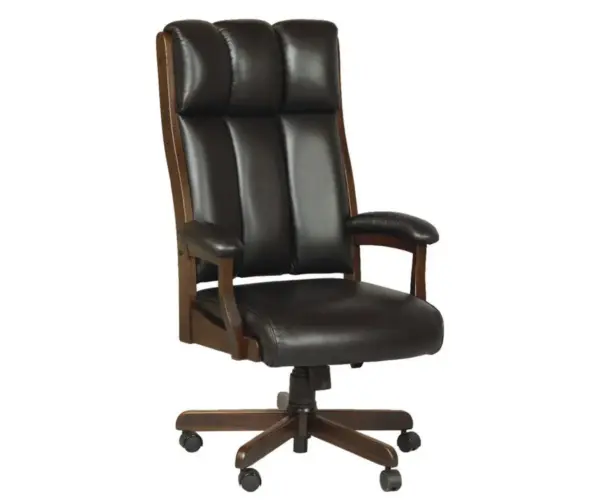
Desk Chairs
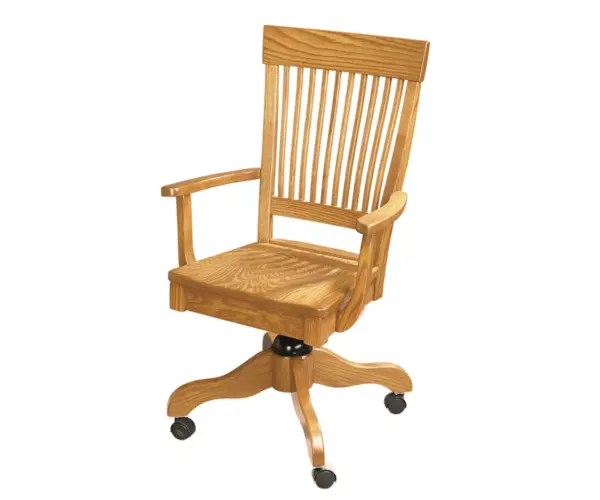
Desk chairs support the user through computer work, writing, and other seated tasks. Available designs may include swivel bases, casters, armrests, upholstered seats, and adjustable components.
Comfort depends on more than appearance. Consider seat height, back support, arm placement, and how easily the chair moves beneath the desk before making a selection.
Sewing Cabinets
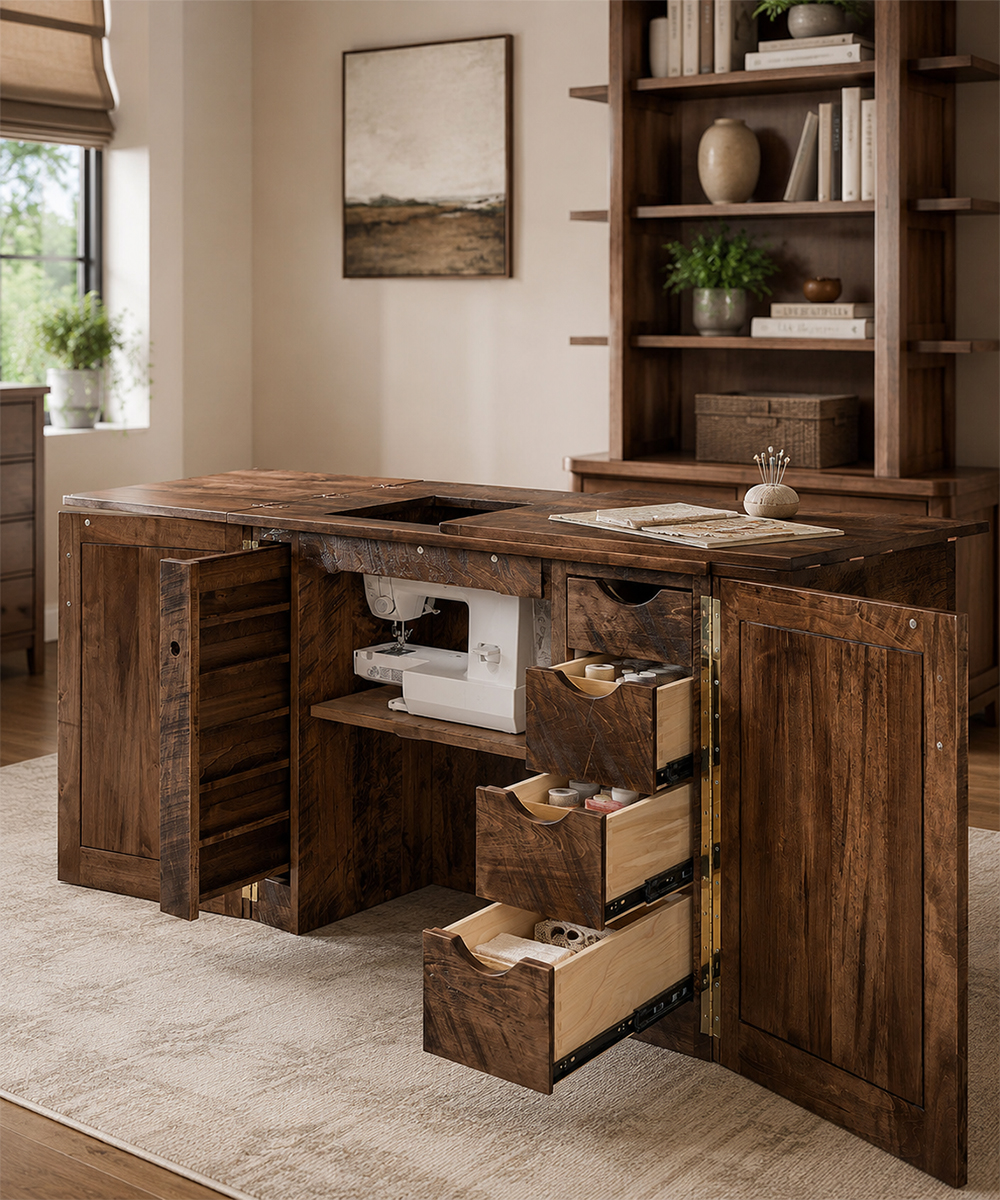
Sewing cabinets create a dedicated station for a sewing machine, tools, patterns, thread, and fabric. Depending on the design, the cabinet may open into a larger work surface and then close into a more compact piece when the project is finished.
Measure the sewing machine and verify the cabinet opening, lift mechanism, surface height, and available storage. Adequate lighting and clearance around the open cabinet can make longer projects more comfortable.
Our Latest Desk Chairs
Our Latest Sewing Cabinets
Custom Options
Choose the Wood, Finish, Hardware, and Style You Love
Office furniture should support the equipment you use, the documents you need to organize, and the amount of time you spend at your desk. Customization can help you create a workstation that fits the room instead of forcing your routine into a standard furniture arrangement.
Available options may include wood species, finish colors, desk dimensions, drawer configurations, hardware, hutch layouts, writing surfaces, cord access, and coordinating storage. Choices vary by design and furniture maker, but the Heirloom Amish Furniture team can help you explore what is available.
- Choose your desk dimensions to fit your room, equipment, and preferred amount of workspace.
- Select your desk configuration to create a straight, corner, executive, or height-adjustable workstation.
- Add vertical organization with a hutch, bookcase, or combination file-storage unit.
- Coordinate wood and finish with flooring, trim, built-ins, and furniture in adjoining rooms.
- Include practical cord access to help manage computers, monitors, chargers, and office equipment.
- Choose supportive seating that works with the desk height and length of your typical workday.
Office Furniture Buying Guide
A functional office begins with a desk that fits your work, followed by storage and seating that keep the space comfortable and organized. Use this chart to compare common office furniture options before planning your room.
| Office Furniture Piece | Best For | Workspace Level | Storage Level | Space Requirement | Why Choose It |
|---|---|---|---|---|---|
| Standard Desk | Writing, laptop use, and lighter office work | Medium | Low to medium | Small to medium | Provides a versatile work surface without excessive visual weight |
| Executive Desk | Full-time work and larger equipment setups | High | High | Large | Combines an expansive desktop with substantial drawer storage |
| L-Shaped Desk | Multitasking and multiple work zones | Very high | Medium to high | Large corner or open area | Separates computer work, paperwork, and other tasks |
| Lift Desk | Alternating between sitting and standing | Medium to high | Varies | Medium | Adds ergonomic flexibility throughout the workday |
| Desk with Hutch | Offices needing vertical organization | Medium | High | Medium wall with adequate height | Keeps books and supplies accessible above the work surface |
| Secretary Desk | Occasional work and multipurpose rooms | Low to medium | Medium | Small | Conceals the workspace when it is not being used |
| Rolltop Desk | Traditional offices and organized paperwork | Medium | High | Medium to large | Provides numerous compartments and a closable desktop |
| Youth Desk | Homework, reading, and creative projects | Low to medium | Low to medium | Small | Creates a dedicated workspace with age-appropriate proportions |
| Bookcase | Books, binders, and display pieces | None | Medium to high | Narrow to wide wall | Adds accessible storage in a wide range of sizes |
| File Cabinet | Document organization | None | Medium to high | Small footprint with drawer clearance | Keeps paperwork categorized and protected |
| Credenza | Equipment, files, and office overflow | Secondary surface | High | Medium to large wall | Adds storage and a broad supplemental surface |
| Office Chair | Daily computer and desk work | Not applicable | None | Requires movement clearance | Provides support and mobility throughout the workday |
See and feel solid wood Office furniture firsthand
Visit Our Winter Garden Showroom
Visit Heirloom Amish Furniture in historic downtown Winter Garden to explore office furniture in person. Sit at different desk styles, open drawers and file storage, compare chair comfort, and see how wood species and finish colors look beyond a computer screen.
Bring your room dimensions, photographs, and measurements for monitors, printers, sewing machines, or other equipment. The showroom team can help you plan a workstation that provides the right amount of surface area, storage, and movement space.
Office Furniture FAQ’s
Start with the tasks you perform most often and the equipment that needs to remain on the work surface. A standard desk may be enough for a laptop and occasional paperwork, while an executive or L-shaped desk is better suited to multiple monitors, documents, and full-time work. Also consider available wall space and chair movement.
An L-shaped desk provides two connected work surfaces, making it easier to separate computer work from paperwork, meetings, or creative projects. It can use a corner efficiently, but it requires careful planning around windows, outlets, doorways, and the direction of the return.
Many office pieces offer choices for wood species, finish color, hardware, dimensions, storage arrangements, hutch designs, and other details. Available options vary by product and builder, so the showroom team can help confirm what can be personalized.
Allow enough space for the chair to roll backward and for someone to walk behind it when necessary. The required clearance depends on the chair, desk depth, and room layout, but marking the proposed furniture dimensions with painter’s tape can help reveal whether the space feels comfortable.
Choose the cabinet according to the volume and orientation of the files you plan to store. Two-drawer cabinets suit smaller offices, while taller three- and four-drawer cabinets provide more capacity without using additional wall width. A credenza may be better when you also need equipment storage or a secondary work surface.
Yes. Coordinated office collections can help match wood species, finish colors, hardware, and design details. You can also combine complementary pieces that share similar proportions or finishes without purchasing an entire matching set.